26 November 2014

Ferguson

OK, here is my take on recent events in Ferguson, Missouri:
  • Mike Brown was engaged in criminal activity at the time of his death, there is no question of that.
  • If the officer's version of events is correct, then he was justified in using deadly force.
  • If not, then he certainly wasn't.
  • Eyewitnesses contradict each other all the time.
  • There should be a civil trial to determine what happened on the balance of probabilities; the Browns need their day in court.
  • There is something frankly rotten in the town of Ferguson.
  • Rioting, especially against those who had nothing to do with it, just makes the town worse. Many of those shops will remain gutted out shells.

23 November 2014

51 Years of 'Doctor Who'

Today marks the 51st anniversary of the broadcast of the first episode of Doctor Who. We've had a change of Doctor to the very different (yet still excellent) Peter Capaldi, another change in title sequence and somewhat of an alteration of tone.

Viewing figures are slightly down (I think being against The X Factor hasn't helped here at all), but are still very good and we now have Capaldi returning for Season 35.

Long may this show continue.

18 November 2014

A pale imitiation of reality (Review: 'The Imitation Game')

Fans of Benedict Cumberbatch will no doubt be interested in his latest film, due to be released in the US on 28 November, but already out in the UK. The Imitation Game is a biopic of Alan Turing, the gay mathematical genius who developed the Turing Bombe and later the world's first electronic computer Colossus at Bletchley Park, helping to crack the German Enigma codes and shorten the war by two years... then ended up being prosecuted for homosexual activity. This resulted in his undergoing chemical castration and later suicide. That's not a spoiler by the way.

As a fan of him myself (although not in that kind of way), I went along to see the film last weekend and frankly, I wasn't impressed. General rule of thumb for me is that if I start looking at my watch, there is a problem with your work.

****
Cumberbatch does a very good job at playing the eccentric Turing; a man not known for playing nicely with others and of course an under-appreciated genius in his time (Enigma was kept secret until the early 1970s, not for fifty years like the final caption says). He gets a lot of funny lines in the peace. That is frankly the best part of the movie... and the rest isn't that great.

Let's start with the plot. It's your standard Hollywood-ised biopic, where Turing and his team of geniuses struggle against a sceptical authority figures (Charles Dance doing what Charles Dance always does) to find a way to crack the Enigma code in a timely manner. The narrative jumps from the war to the late 1920s to 1951 like an Enigma rotor; a frankly unnecessary device. It ignores the fact that ULTRA was a huge operation involving a few thousand people and omits one key figure entirely, Tommy Flowers, who actually built the (many) Bombes that Turing improved from the Polish bombas. It feels very trite at times... and it delays revealing the name of one key character until a key plot point; some of us who know our history would have liked to be able to spot that one coming.

Another problem is Keira Knightley, playing Joan Clarke, a close friend of Turing and an expert mathematician. Unfortunately, I just couldn't take her seriously. I was thinking to the effects "I've seen you half-naked in perfume ads and I'm supposed to think you're a maths genius?" Call me judgmental... but the real Joan Clarke was apparently quite plain.

Cumberbatch doesn't actually kiss any men in this movie (IIRC), making it a male version of Katy Perry's "I Kissed A Girl"... an attempt to avoid controversy for the US market perhaps?

Conclusion

Save your money and buy a book covering the real story. Cumberbatch doesn't make this worthwhile.

5/10

11 November 2014

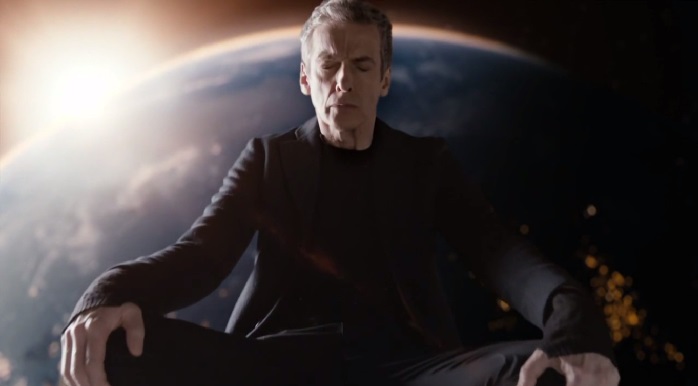
Hey Missy, she's so mad (Review: 'Doctor Who' 34.12, "Death in Heaven")

Concluding this two-parter, Missy is about to turn the dead of Earth into an army of Cybermen.
  • I loved the opening credits gag.
  • Capaldi was on great form throughout this episode - with many great lines, including the bit about "self-concussing".
  • Coleman was on fine form as well - pretending to be the Doctor was excellent, but the last scene in the cafe was good as well.
  • Samuel Anderson did a lovely performance; it's a shame that he won't be coming back now.
  • Michelle Gomez... just when you thought a certain Time Lord couldn't get any crazier, she comes along and knocks Simm's portrayal into a cocked hat. Poor Oswin...
  • Shame we couldn't have had the Tissue Compression Eliminator. Disintegration is so old hat.
  • You don't need to hit the console like that Doctor, it wasn't your fault.
  • The street scene where Missy was arrested was very recognisably Cardiff, as was the ending scene.
  • It's really quite appropriate that Missy was dealt with in that manner.
  • At least the ending was jolly... and it's about time Nick Frost joined Simon Pegg in the Whoniverse.

Conclusion
An enjoyable and suitably epic season finale, which wasn't afraid to actually kill off some characters. Christmas will be interesting.

8/10

Remembrance 2014

Today marks the 96th anniversary of the end of the First World War - and this year of course is the 100th anniversary of its start.

Of course, those in the trenches on that day in November 1914 had no idea that it would end four years later - I'd imagine it was clear that it was certainly not going to be done by Christmas. Many of them, young-ish men just like many of my readers would not be going home; they'd remain in a corner of a foreign field that is forever Britain.

We will remember them.

09 November 2014

1989, 25 years on: (East) Germany


http://upload.wikimedia.org/wikipedia/commons/2/25/BerlinWall-BrandenburgGate.jpg
Standing on the wall, 10 November 1989 (photo: Sue Ream)

Today, 9 November 2014, marks the 25th anniversary of the fall of the Berlin Wall. It also marks the 76th anniversary of Kristallnacht and the 91st anniversary of the Munich Beer Hall Putsch (yep, that one)... which is one reason why they didn't use that date for the actual reunification of Germany. Indeed Kristallnacht and the whole Nazi regime play a massive part in the history of what was East Germany...

I'm going to avoid a long discussion of post war German history; many people will know about the Soviet operations in eastern Germany already - indeed I covered it in 2011 with my series on the Great Patriotic War. I will of course have to mention the Berlin Wall.

The Wall and the Curtain

Erected on 13 August 1961, the Berlin Wall became one of the defining symbols of the Cold War; the 12-foot high concrete structure that surrounded two-thirds of West Berlin (the rest was simpler barbed wire fence). Of course, this heavily graffiti-covered structure was only the final barrier for an East German seeking to reach the West; before that they had to cross another wall, alarmed fences, dog runs and a sand-covered death strip; all while being shot at. Indeed, a major upgrade of the system was in the pipeline just as the regime fell. The East German border guards were under shoot-to-kill orders; if they did let someone escape, they would be in very serious trouble. The estimates of how many people died trying to cross the wall vary (the German Democratic Republic were good at covering them up, especially in more isolated locations) but is believed to be at least 136.

In addition, most of the S-Bahn and U-Bahn stations on Western lines that transited East Berlin between two parts of West Berlin were closed and patrolled by border guards (except Frederichstrasse); these darkened "ghost stations" fell into a fair amount of disrepair over the 28 year history of the wall. As indeed did the permanent way; it took a fair amount of ingenuity and considerable tact to keep the U-Bahn running through enemy territory, especially when things started breaking down.

The S-Bahn in West Berlin was operated by Deutsche Reichsbahn i.e. the East German state rail company, but was subject to heavy boycott by the locals (who did not want to subsidise the GDR), the loss of half the service after a 1980 strike and eventually turned over to the Western transit authorities in 1984.

While everyone focusses on the Berlin Wall, there was also the heavily fortified and much harder to cross "Inner-German Border" between East and West Germany i.e. the main Iron Curtain. Unlike Berlin (where having someone step on one would be spectacularly bad publicity for the GDR), this contained minefields and also spring-loaded machine guns.

If people wanted to escape to the West, they would have a better chance by applying for permission to leave, but this was rarely granted, could take years and tended to draw the attention of the Stasi in an unwelcome manner. Athletes and entertainers going abroad had to leave their families in East Germany in case they started getting ideas. If you were a serious dissident, however, they might well be happy to get rid of you... especially if Bonn was willing to pay hard currency for your 'release'... about 3.5 billion Marks traded hands this way.

If you did manage to get the West, you didn't need to worry about getting work permits though - West Germany basically gave any East German citizenship automatically as the Basic Law allowed anyone born in the Germany of 1937 (i.e. including the parts taken by Poland and the USSR) to claim it.

Westerners could of course visit East Berlin, but had to exchange money at a very poor exchange rate (so the GDR could get their hands on more hard currency) and pay 5 Deutschmark for a Visa - of course a lot more back then. As the Germanies were still 'occupied countries', Allied military personnel could travel freely between the zones and indeed were able to engage in legitimate espionage on each other via the Military Liaison Missions, getting a look at each other's technology.

The 1980s

As the 1980s began, the German Democratic Republic, led by Eric Honecker and his Socialist Unity Party (SED) since 1971, was still a pretty unpleasant place to be a dissident; many prominent writers who criticised the regime either fled or got thrown out.

The GDR like most of the Soviet bloc countries, was starting to run into major economic problems. German coffee drinkers had a pretty unpleasant experience in the late 1970s when a global rise in raw bean prices led to the Politburo yanking most of the cheaper stuff from sale and replacing it with unpleasant 'ersatz' alternatives with a lot of filler. In addition, there were a good number of environmental issues; most lakes and rivers were pretty polluted.

Well at least the athletes were doing well... oh, wait, they were on the performance enhancing drugs!

The Western half was booming - and the East Germans knew this; it was easy for them to watch ARD etc. programming in most of the country as the regime couldn't jam the broadcasts without causing problems for West Berliners and those along the border - this was not only against treaties but could have led to counter-jamming by Bonn. East Germany's state broadcaster, DFF tried to undermine this by a weekly programmed called Der schwarze Kanal ("The black channel", a reference to a German plumbing term meaning "sewer") that 'corrected' the West German broadcasts... and wasn't popular at all.

In 1987, Ronald Reagan, the former B-movie actor turned President, visited Berlin and made a famous speech directed at the Soviet leader. The key quote is here:

General Secretary Gorbachev, if you seek peace, if you seek prosperity for the Soviet Union and Eastern Europe, if you seek liberalization: Come here to this gate! Mr. Gorbachev, open this gate! Mr. Gorbachev, tear down this wall!

The "tear down this wall" bit was kept by Reagan over the concerns of his advisers, who thought it might upset the Soviet Union - there had been some significant recent moves towards a new arms control agreement. The speech (which also contained a call for an end to the arms race) wasn't actually that widely reported at the time; East Berliners couldn't hear it as they were kept away from the wall.

Arguably of more impact was Bruce Springsteen's concert in the GDR the following year; he called for the wall to come down in front of 300,000 concert-goers and a TV audience ("I'm not here for or against any government. I've come to play rock 'n' roll for you in the hope that one day all the barriers will be torn down"). The Hoff probably had little to do with it.

1989

When 1989 started, it didn't seem like things were going to change massively in East Germany - Honecker had predicted it would stay for another 50 or 100 year if conditions didn't change (i.e. East  Germany was still communist and West Germany wasn't).

In May, the GDR held local government elections... and the results were completely faked. Soviet bloc 'elections' were basically referendums on electing approved candidates... you could theoretically reject them, but you were likely to get into trouble if you did.

It was announced that the confirmed candidates from the National Front coalition (the SED and its allied parties) had got 98.85% support from the electorate. As the electoral observers had clearly seen far more than that refuse to vote and a turnout of between 60-80%, it was clearly something was very whiffy.

This led to protests and petitions, with a resulting large number of arrests. When Tienanmen Square happened in China, it was publicly welcomed by the official SED newspaper, Neues Deutschland, which naturally led to concerns that the same sort of thing would happen in East Germany.


Then came the Hungarian revolution (see this article) and thus the Iron Curtain now had a great big hole in it. A large number of East Germans decided to go to Hungary on holiday, slip across to Austria and thus to West Germany. Budapest stopped East Germans coming after pressure from Pankow... but many already there merely camped in the West German embasssy until allowed to leave. Pankow would then bar East Germans from going to Hungary, so they went to Czechoslovakia and Poland instead, camping in those embassies in what would become quite unpleasant conditions.
In September, weekly Monday protests began in Leipzig, backed by the Lutheran Church, which had been tolerated by the regime instead of being completely suppressed. These peaceful demos called for free travel and free elections; they soon spread to other East German cities such as Dresden.

An agreement was reached allowing those in the embassy in Prague to travel to West Germany in early October (in sealed trains going through the GDR... and stripped them of their citizenship to boot); the regime wanted the 40th anniversary celebrations of the GDR on 7 October to pass off without incident...

They didn't; many events were cancelled and counter-demonstrations in Berlin led to 1,200 arrests, including of those who weren't involved at all. Most were released within twenty-four hours, after being spat at, denied the use of a toilet or beaten. This was directly reported in the Western media, who of course had a much better view of events in East Berlin.

Honecker sent a paratrooper unit to Leipzig... where a bloodbath was averted by the local party officials ordering the troops to pull back. Further plans to suppress the demonstrations by force were also stopped.

The paratrooper incident was what the Politburo needed to remove Honecker who wasn't dying quickly enough; they got approval from Gorbachev to do this and in a session on the 17th, he was unanimously removed from his posts and replaced with his number two, Egon Krenz. In addition, it became clear from their own internal assessments that the country was close to economic collapse.

On 4 November, the biggest demonstration of the lot took place in Alexanderplatz, with between half a million and a million people attending this. Not only did the regime allow this to take place, it was actually broadcast live on television.

The Wall comes down

The Politburo decided to allow people to leave for the West after getting a passport (which only four of seventeen million East Germans then had) and applying for a visa in the meeting on 9 November. This was meant to be a controlled opening of the borders for those who wished to leave permanently... it turned out to be nothing of the sort. 

Günter Schabowski, the regime's unofficial spokesman, got handed the new regulations, but wasn't told it wouldn't come into effect until 4am the following day (so the border guards could be told). In a press conference, he was asked (it's unclear by who) when the regulations would come into effect... and answered it would be immediate. Also that it would cover West Berlin

The West German news programmes led with the press conference... which of course meant most of East Germany knew as well.

Large crowds soon appeared at the checkpoints, demanding to be allowed through. The border guards initially planned to let the noisiest through and stamp their passports "no return allowed", but that was going out the window rapidly. When a crowd broke through into the waiting area of the Bornholmer Strasse checkpoint at about 10.30pm, the commander of the Border Guard present decided that he was not going to put himself and his soldiers at risk by trying to stop them; the crowd could just do what it wanted. Other checkpoints made the same decision over the next couple of hours.

And the crowd certainly did what it wanted. Long queues of Trabants would be seen crossing through the border as millions of Germans, some still in their pyjamas, joined what became a massive party. It was a great night for those selling champagne... and a great morning for those selling aspirin.

The events took everyone by surprise; West German Chancellor Helmut Kohl had to cut short a state visit to Poland; he was attending a banquet when the news came through and realised he was very much in the wrong place.

West Germany gave all the visitors 100 Marks welcome money... which many of them promptly spent on, believe it or not, bananas. They were very rare in the East.

While people started to hammer at the wall on the night of 9 November, it wasn't until June 1990 that the official demolition began - official border controls were formally abolished on 1 July, the day East Germany adopted the Deutschmark, but things had become meaningless well before that.

The U-Bahn and S-Bahn stations would take two and half years to fully reopen (Jannowitzbrücke
opened on 11 November, but most of the rest had to wait until 1990); the signs and advertisements were unchanged since 1961, but none of this was preserved. A short-lived Maglev Line, the largely novelty M-Bahn, was closed and removed to allow the U2 line to be reinstated. It would take until 2002 to fully reinstate the 'Ringbahn' on the S-Bahn (later run by Deutsche Bahn, created by the 1994 merger of Deutsche Bundesbahn and Deutsche Reichsbahn) that had been broken by the Wall.

That was very much the end for the SED regime. On 1 December, the Volkskammer showed some considerable teeth and removed the right of the SED to rule from the constitution; the entire Politburo resigned two days later.

Reunification

The slogan began to change - it became Wir sind ein Volk; "we are one people". However, reunifying Germany was not without its opponents; for example Margaret Thatcher (who would last as PM only a month and a half after East Germany disappeared) feared that a united Germany would try to take over Europe again - she wanted it delayed by at least five years. Mitterrand, the French President, was also concerned about this, but realised that reunification was inevitable and hoped that a reunified Germany could be contained within a closer Europe with a single currency.

When East Germany held its first and only democratic elections in March 1990, a CDU-led alliance calling for swift reunification won with Lothar de Maizière becoming Prime Minister in a grand coalition. East Germany's economy was rapidly collapsing and an economic treaty was signed in May. On 1 July, the 'Ostmark' ceased to be anything other than something for collectors as East Germany adopted the Western mark and the day after, the two countries started discussing reunification in full. This was signed at the end of August and ratified on 20 September by large majorities in both legislatures.

There was now the question of getting the occupation ended and the superpowers to agree to reunification. The Treaty on the Final Settlement with Respect to Germany was signed in September by the four occupying powers (US, UK, France, USSR) and the two Germanies. The key points were as follows:
  • Germany would be fully independent and free to join whatever organisations it wished, so would remain a NATO member.
  • Germany would agree with Poland to make the Oder-Neisse line that had been their border since 1945 permanent and renounce any claims to the formerly German territories east of it.
  • All Soviet (later Russian of course) forces were to leave by the end of 1994.
  • The Bundeswehr would be limited to 370,000 and Germany would renounce all WMD; also no WMD or foreign (i.e. NATO) forces would be deployed in the former East Germany.
    • The US and UK would retain their bases in the western part, with US tactical nukes kept in Germany available for use by the Luftwaffe's Tornado fleet in the event of a war... one of the more notable loopholes in the Non-Proliferation Treaty.
It has been claimed by Gorbachev and others that there was also an agreement that NATO would not expand further east, which of course it later did. It certainly was not in writing, but it may well have been verbal. I doubt after events in Ukraine, Estonia et. al really care whether any agreement was made.

In September, East Germany's parliament building, the Palast der Republik was found to be riddled with asbestos and closed to the public; it took until 2003 for it to be removed (I passed the outside of the empty building on 2001 on a school trip) and was finally demolished in 2008; the site is being used for a rebuilt Stadtschloss due to open in 2019 - the old Prussian palace had been heavily damaged in 1945 by Allied bombing and pulled down in 1950. Ironically enough, much of the steel from the Palast der Republik was used in the Burj Khalifa in Dubai!

On 3 October 1990 (chosen for one reason so East Germany could not have a 41st birthday), East Germany ceased to exist. Its territory became five and a half (East Berlin became part of Berlin, which formally became a Land ) states of the enlarged Federal Republic of Germany, which only had some minor constitutional changes to accommodate the fact that reunification was done. Indeed, the Basic Law, intended as a temporary constitution back in 1949 pending this happening, would remain the key legislative foundation of what was now Germany.

The following month, the first free all-German elections since 1932 saw Kohl's coalition returned with an increased majority.

Honecker was quickly subject to a criminal investigation over deaths at the Wall and other things, but it would take three long years (during which time he fled to Moscow) before his trial began. He admitted political responsibility, but the case ultimately was dropped on the grounds that he was seriously ill i.e. his lawyers successfully got the warrant quashed. He went to Chile and died in 1994.

Criminal investigation followed for a lot of other people, mostly over the Wall. Krenz got six and a half years for four manslaughter charges (they'd limited to that for procedural reasons) in 1997 - after failing to get the conviction overturned, he entered prison in 1999 and was released in 2003, quietly retiring after that. Various border guards would face trial, tending to get short or suspended sentences, as did a former West Berlin police officer who killed a border guard while providing 'covering fire' for an escapee.

Other chickens soon came home to roost. Stasi employees had tried to destroy the records of their agency, but citizens of the GDR had occupied the buildings and stopped this. The Federal Commissioner for the Records of the State Security Service of the former German Democratic Republic (its first boss, Joachim Gauck, now holds the largely ceremonial role of Federal President) began collating the records and eventually started putting the shredded ones back together; in 1992, these were declassified and people were allowed to look for their own files; depersonalised files could be released in the media. The sheer number of informants became clear - 500,000 regular ones were informing on the activities of their fellow citizens.

The impacts of reunification


East Germany, as the state right next to West Germany (along with Czechoslovakia) was home to a large Soviet presence as well as a well-equipped armed forces of its own, whose uniforms bore an uncomfortable resemblance to those of the Wehrmacht. These armed forces were equipped with equipment very close to that used by the USSR itself, so reunification gave NATO an intelligence boon, if not exactly highly usable assets. Most of the Pact equipment was retired or sold, but the MiG-29 fleet would see over a decade of use in the Luftwaffe before being sold to Poland for one Euro each. As for the members of the National People's Army, most of them were let go, including everyone at the rank of Lieutenant Colonel or above; they could not until 2005 count the time served towards a federal pension and most were only able to get security or manual labour jobs.

It wasn't exactly brilliant for many other people who had worked in the nationalised industries of the deceased state. 8,500 industries were privatised and most were so inefficient that the new owners closed them quickly. The result was high unemployment (double digits in the East) and some general resentment on both sides of the former wall - the Western side unhappy about the higher than expected cost. It would cost a trillion euros in the first twenty years of reunification to reconstruct eastern Germany; and it's still not done.

Germany today
 
Today, now in her third term, former East German chemist Angela Merkel rules Germany as the first female Federal Chancellor, her centre-right Christian Democratic Union, with its de-facto Bavarian version the Christian Socialists, in a second grand coalition with the Social Democrats after the traditional CDU coalition partners, the Free Democrats, failed to gain even a single seat in the Bundestag (Germany's lower house) 2013 elections.

Germany was hit hard by the 2008-9 recession, but bounced back quickly due to strong exports - although growth has now stalled. There are concerns about integration of immigrants (a million arrived in 2012) and Germany's ageing population.

The other two parties in the Bundestag are the Greens and The Left, a merger of the PDS (the successor to the Socialist Unity Party; they'd been roundly defeated in the 1990 elections) and a Western left-wing party. The latter are not really the kind of people prepared to play the coalition at present. The Eurosceptic Alternative for Germany almost beat the Free Democrats, but both of those failed to clear the 5% threshold for a seat.

The far-right National Democratic Party has never managed to get into the Bundestag, but has got enough support to get into state legislatures on eleven occasions; they have five members in Mecklenburg-West Pomerania at present. Attempts to ban them entirely have fallen on the issue of just how much the party is infiltrated by Germany's domestic intelligence service, the Office for the Protection of the Constitution.

Germany remains a US ally and an active member of NATO; however, relations with the US have been strained in recent months after WikiLeaks revelations about the NSA hacking Merkel's phone. It is highly pro-EU and was a founding member of the Euro currency; although it opposes Turkey's membership. There are likely to be more disagreements with the UK over free movement of people, at least while David Cameron remains in Downing Street... and Merkel's leading role in austerity measures imposed on countries needing bailouts is not making her popular in some countries. In addition, Merkel's second administration ended conscription in Germany.

Berlin itself is a city transformed; you can't even see the line of the wall in the borough boundaries (the boroughs were were reduced in number from 21 to ten in 2001 to save money) and the tramlines largely confined to the old East Berlin are starting to go west.

Very little of the wall remains in situ; the East Side Gallery on Mühlenstraße is the eastern wall and the graffiti there is post-1989 (the GDR generally did allow it on their side). Bits of the wall (or claimed bits of the wall) are still sold on-line and off-line - a look on the UK eBay site on 20 October 2014 found 58 items under a search "piece of the Berlin Wall".

However, some elements of East Germany still live on partly due to 'Ostalgie' (nostalgia for the East); the Ampelmännchen (East Germany's hat-wearing pedestrian traffic indicators) has spread to the West as well and believe it or not, the Trabant still has a cult following.

It even passed the 'Moose Test' in 1998... swerving to avoid a hypothetical moose on the road without tipping... at the same time the Mercedes A-Class failed.

With that humorous finale, I will move on to Czechoslovakia.

05 November 2014

US Mid-terms 2014

So the Republicans have won control of both Houses of Congress in the mid-term elections. Here wer go for yet another two years with no proper budget in the US... perhaps we'll even have another shutdown.

While the Republicans have been highly obstructive, Obama has been a disappointment to say the least. His only achievement of note? Obamacare and that's not all it's cracked up to be (there has been an increase in premiums for many). The Russians have Crimea, the Arab Spring has produced Islamic State and firearm ownership is on the increase.

Well at least it's a good time to make cannabis; more states are legalising it following ballots yesterday.

James Bond: Skyfall

5 November is a good time for a spot of gunpowder, treason and plot. With production about to start on Bond 24, I have finally managed to complete my re-watch of the Bond movies with Skyfall. Quantum of Solace drags at 100 minutes... this flies by at 137.

The cinematography here is superb and there is a lot of great atmosphere throughout. The action is excellent across the entire movie and the acting is overall very good as well - with most of the cast returning for the next film, it will be interesting to see how they develop, especially Q.

Weaknesses? The plot isn't the greatest and lacks the overall epic-ness associated with 007. Silva? He tries to be menacing, but the guy largely comes across as pathetic and in bad need of counselling.

Conclusion

Perhaps not the all-time great that it was thought of at the time; but still an impressive Bond movie even on second watch.

8/10

04 November 2014

Well, I can't say I saw that one coming (Review: 'Doctor Who' 34.11, "Dark Water")

When Danny Pink is killed in a road accident, Clara gets the Doctor to try and bring him back from the dead... but the two discover that 'death' can be a very
  • Trailers always mislead; the scene with Clara was only a small bit of the episode; and the Moff does lovely get-outs.
  • Was it me or was the theme out of sync again this week.
  • Moffat's version of the Twelfth Doctor is very grumpy and very alien; his reaction to the kissing was very different to Eleven.
  • 57 fan-fic writers just punched the air!
  • Clara had some great stuff here; grief can cause you to do funny things. However, was Missy expecting her to do that? If so, bad writing.
  • The whole Nethersphere arrival thing reminded me some what of the final Virgin New Adventures Timewyrm novel.
  • Lovely to see the Cybermen back, but I guess that UNIT will be in the episode next week... and hopefully we'll get some proper Cyber-action.
  • Yes, I got the organic material joke too.
  • I guessed Danny had shot a kid. Sort of thing you'd get with a character like that
  • Well, I wasn't expecting that to be Missy's identity.
Conclusion

That episode flew by; I didn't even realise that we were coming towards the end. Which means it really absorbed my attention, although the start was a bit slow.

8/10

27 October 2014

Not Wooden At All (Review: 'Doctor Who' 34.10, "In the Forest of the Night")

The Doctor arrives in the centre of London, to find it has been filled with a massive forest.

  • Capaldi was excellent in this one. We seem to have finally got a good idea of the core concept of this character; grumpy, aloof but also very funny.
  • Clara and Danny are turning into a great couple; they have wonderful arguments and I'm really liking Danny. Still wondering what his dark secret is.
  • Lots of kids in this one (this seems to be a theme of this season) and they had some great bits. I loved the girl who found 'x'.
  • In the forest of the night? It all took place in daylight!
  • I see no-one actually set fire to a tiger; now that would be cruel. They really are big cats from when I've seen them 'live'
  • The whole signs and traffic lights thing reminded me of Falling Skies, but without the grimness of that. As well as far fewer deaths.
  • Frank Cottrell Boyce also wrote the London Olympics Opening Ceremony; I've got to say that was actually one of my favourite bits of those Games... unlike the other ceremonies.
  • There was brilliant dialogue in this, reminiscent of Moffat. 
  • Hitting the old reset button again?! The final scene was tacked on, but it probably needed to be there.

Conclusion

A rather tree-mendous episode. Get it, tree-mendous.

I'll get me coat...

9/10

Exit Afghanistan

The British military operation in Afghanistan has come to an end after 13 years. Just come to an end; not with a victory nor with us being driven out.

The impact of our (and ISAF's) involvement here is mixed. It has caused considerable disruption to Islamist activities; while we may well see many more Lee Rigbys, I do not think we will see another 9/11. Al-Qaeda itself is a mere shadow of what it was and bin Laden is dead. Afghanistan cannot be used as a safe haven for terrorists any more and I doubt it will ever be. It's certainly a lot freer than it was and girls now can go to school.

However, the Taliban are still around, Afghanistan is still a dangerous place (although not as dangerous as Iraq or Syria) and corruption is endemic. Our troops lacked the support and equipment they needed, lives were lost as a result.

We did good, but we could have done better.

23 October 2014

1989, 25 years on: Hungary

A Hungarian flag with the communist coat of arms cut out - while they were actually removed after the 1956 Uprising, it remains a potent symbol of the events of 1989 (Guilherme Paula on Wikipedia)

Hungary, the second of the communist dominoes to fall, has definitely got one of the more interesting histories of any country in Europe. This landlocked former part of the Austrian Empire, its native population originated from the Urals and resulted in Hungarian being one of the three national languages in Europe in the Uralic family... so it doesn't sound like much else on the continent.

Of course, there is another reason of interest... because Hungary had already gotten rid of the communists before - for a short while.

The takeover

Hungary had been a member of the Axis powers during the war, participating in the war against the USSR and assisting in the Holocaust in a pretty large way. When the war started going badly, they began secret negotiations with the West, that eventually led to a German occupation... but eventually that was pushed aside by the Red Army.
The Soviets treated the Hungarians harshly - 600,000 were deported to the USSR and of those, two hundred thousand died in captivity. Just one of many crimes that the Soviet Union carried out over the years and one that should probably get more prominence.

1956

The death of Stalin in 1953 and the later 'Secret Speech' of 1956 saw reform elements gaining influence in the governments of the soon to be created Warsaw Pact, including Hungary's prime minister, Imre Nagy, although he was removed from office in 1955. 
  
On 23 October, a large student demonstration that had started peacefully turned violent with the ÁVH (secret police) opening fire on the crowds... who then started to arm themselves. Hungarian soldiers sent to relieve them instead joined the crowd and the following morning the Soviet forces in Hungary, at the request of Working People's Party Secretary Ernő Gerő, began to intervene in the situation. An armed uprising, with all the associated things that involves (lynchings, citizens arming themselves etc.), was in full effect. By 28 October, the government had collapsed and Nagy became Prime Minister again.

Nagy announced constitutional changes and later that Hungary was going to leave the Warsaw Pact, to become neutral. The USSR decided against intervention on the 30th, but for various reasons that differ between sources, changed their mind the following day.

In November, a massive Soviet intervention in Hungary saw the new government removed from power pretty swiftly. Despite some strong public condemnation, the West could do little; there was a risk of things escalating into a global war and events in Suez had damaged the reputation of the NATO powers (if they could intervene in Egypt, why couldn't the Soviets intervene in Hungary?). About 50 million dollars (in today's money) was raised to support the refugees via appeals, including on US television.

Western European communist parties splintered badly over this; between those who supported the invasion and those who opposed it; much of their former power had gone not to return.

Nagy fled to the Yugoslav embassy (Yugoslavia having broken from the Soviet bloc), but despite a written assurance of safe passage from the new leadership, he was arrested on leaving, tried in secret and hanged. His trial and sentence weren't announced until they were done and he was buried in an unmarked grave... his hands and feet tied with barbed wire (he was dead! What did they think he was going to do?).  

Immediately after, the Hungarian water polo team played the Soviet one in a semi-final match at the Melbourne Olympics. An angry Hungary team won the contest 4-0 in what was dubbed the "Blood in the Water" match, with violent conduct from the outset and the tie being ended with a minute left to play after a crowd invasion that resulted from one of the Hungarians getting an eye gash after being punched. Hungary beat Yugoslavia 2-1 in the final and half their Olympic delegation defected to the West afterwards.

The intervening years 

After the initial violent retribution, János Kádár (a leader in the uprising who had switched sides when told that the old leadership would otherwise be restored, although it could be argued that he should have said no anyway) lifted many of the restrictions and while still authoritarian compared with the West, it was less so than the other COMECON countries.


There were some economic reforms and the country got relatively high living standards (for COMECON), but Hungary ended up with many of the same problems of its neighbours; high foreign debt, low-quality domestic goods and housing shortages, despite the widespread construction of Panelház, tower blocks of the sort that were widespread during this time on both sides of the Iron Curtain and are still numerous today; 17.5% of the population of Hungary lived in one in 2011. International tourism played a big role in Hungary's economy, both from the West and also from other Eastern bloc nations - in 1978, the US returned the Holy Crown of Hungary's former kings to the country, it having been held in Fort Knox since being recovered from the Nazis by US troops in Austria in 1945.

Kádár himself lived a modest lifestyle; unlike other Communist leaders.

1989


Kádár retired in 1988; the economy was failing - and so was his health. He would die on 6 July 1989. Károly Grósz succeeded him as General Secretary and Prime Minister at his recommendation, but it became that his 'moderate' reforms were not widely supported even within his own party; he was replaced as PM in November by Miklós Németh, who in December made his views clear that moving to a market economy was the only way to avoid social catastrophe. Wages were falling in real terms and foreign debt was becoming a big issue.


(It is important to remember when dealing with the former Soviet bloc that the real power holder was the First or General Secretary; the President and/or Prime Minister was frequently, but by no means always a different person and had little real power)

In March, the Central Committee admitted to itself that they were going to have to go multi-party and after big demonstrations on 15 March (the day Hungary marks the 1848 Revolution, a failed attempt at independence from Austria), began meeting with a 'Round Table' of opposition groups. These largely behind the scenes negotiations would carry on for much of the year.

As well as the new PM, another leader was working behind the scenes to bring down communism - Imre Pozsgay, who worked his way up to the Central Committee. He managed to persuade (or he so he claims) the leadership not to launch a coup in April.

On 2 May 1989, Imre Pozsgay got the Hungarian Army to begin to remove the border fence with Austria; this was the first chink in the Iron Curtain. Moscow did nothing about it (and nor would they), even when the Hungarians actively encouraged holidaying East Germans to cross into Austria and thus to West Germany; including via a Peace Picnic in August where several hundred crossed over with no attempt by the army to stop them. The Austria-Hungary border was a much simpler affair to dismantle than the one between the two Germanies, which was among other things heavily mined.

In June, the Politburo admitted Nagy had been executed illegally after a show trial. He and two other victims were dug up and reburied in the same plot, but this time it was a proper grave with a memorial.

A deal was reached on the Round Table Talks in September; the opposition split over the issue of the presidency, with the moderates implicitly accepting Pozsgay as president and the radicals being against.

16-20 October saw an epic and historic session of parliament; as the Hungarian legislature voted after the agreement to completely change the system; ensuring direct presidential elections, multi-party parliamentary ones, guarantees of rights and a separation of powers. On the 23rd, the Presidential Council dissolved itself. That same month, the Communist Party became the Hungarian Socialist Party... but a majority of its MPs didn't join and Imre Pozsgay didn't become president. The Communists were pretty much done.

Free elections followed in May 1990 - the centre right Hungarian Democratic Forum won, with the former communists ending up fourth. The former ended up as leaders of a centre-right coalition.

The same year, Hungary withdrew from participation in Warsaw Pact exercise and Soviet forces left in 1991, the same year the Pact ceased to exist.

Hungary today

The Socialist Party, now very different from its predecessors, would return to power from 2002-2010 as leader of a coalition and later a minority government; it would do badly in the 2014 European Elections (only getting 10% of the vote), with the result being the resignation of its entire presidium.

Hungary joined the EU in 2004; it is also part of the Schengen Agreement, so where before there was an electric fence with Austria, there are now not even regular border checks - Hungary also has this situation with Slovakia and Slovenia, but not yet with Croatia, Romania and of course Ukraine.

However, there have been problems in recent years. The country suffered heavily in the 2008 crash; there was a lot of borrowing that left it vulnerable. It eventually needed IMF and European Central Bank bailouts to avoid a collapse.


Then in 2010, Viktor Orban, Prime Minister from 1998-2002 (and also involved in the Round Table talks), returned to power, with his coalition Fidesz gaining a two-thirds majority; enough to impose a new constitution on Hungary. The nationalist conservative government (who were David Cameron's only allies in opposing Jean-Claude Juncker getting the EU Commission job) put in a new Fundamental Law that has been heavily criticised for reducing checks and balances, trying to impose a Christian ideology on a country not hugely religious and limiting the freedom of the press. 

Orban is one of Europe's more dangerous leaders; there is also a strong far-right party in the country that doesn't like Roma or Jews very much.

Hungary, the second of the countries to escape communism, could end up going to fascism again if it is not careful.
 

20 October 2014

A Pacer, but not a Sprinter (Review: 'Doctor Who' 34.9, "Flatline")

Clara, with some assistance from the Doctor who is trapped in the TARDIS, has to stop some two-dimensional aliens.
  • Clara was doing the Doctor-y stuff this week and doing very well at it; you could do an entire series (or novel) with just her.
  • There were some great scenes with Capaldi in the TARDIS and we've now firmly established "pudding brain" as a catchphrases. Many a laugh, that's for sure.
  • The creatures were scary, if a bit two-dimensional (ba boom tish).
  • Does Doctor Who not have the kudos to actually use a DMU type that hasn't been retired from the main network for over a decade? I'd love to see a Pacer get destroyed.
  • Definitely not doing the 'everyone lives' trick these days, that's for sure.
  • Bristol? Not a choice I'd make, but nothing wrong with it.
  • Stan was a real nasty piece of work; wasn't the actor in Auf Wiedersehen Pet?
  • That banishment speech? So done before. It was supposed to feel epic, but it was just derivative.
  • The plot thickens with Missy...

Conclusion

Certainly one that engaged the attention with a good deal of humour, although I have to admit the train bit annoyed me.

7/10

18 October 2014

Not Quite First Class, but heading there (Review: 'Doctor Who' 34.8, "Mummy on the Orient Express")

The Doctor and Clara (surprisingly) board a hyperspace version of the Orient Express, where an invisible mummy is picking people off.

  • Capaldi was again great in this episode; I doubt the Doctor is heartless deliberately, but he certainly comes across that way.
  • I'm sure that Clara's flapper outfit will get some positive comments among the fans; she's definitely been given a Fan Service Pack this season.
  • I'm glad that they chucked in the line about it being slightly bigger than the 'real' one; you know what the fans can be like.
  • Frank Skinner was rather good in this; I've not seen him in much as a serious actor and hopefully he'll do some more.
  • This wasn't the best paced story in the world; the resolution was a little sudden.
  • Some great lines in this; I particularly liked what seemed to be a Tom Baker impression by Capaldi, but Coleman got some good ones too.
  • Gus... total psycho; reminds me of GlaDOS from Portal.
  • Jelly babies in a cigarette case? Classic.
  • Still would like Danny Pink to actually leave Earth.

Conclusion

An enjoyable episode, but by no means a classic.

7/10

10 October 2014

Clacton and Heywood

UKIP has gained its first elected MP; the party switcher Douglas Carswell getting elected by a five-figure majority for the Eurosceptic party.

In addition, Labour got its majority in Heywood and Middleton slashed to 617, but did manage to retain the seat.

One is always in danger of drawing too much from a by-election, especially in a place like Clacton; very white, in coastal Essex; a high-profile by-election of an ex-Tory defector. A big blow to the Conservatives sure, but how big was Carswell's personal vote?

Heywood is of a bit more concern to Labour... but the close result's impact is diminished by the fact that only 36% of the electorate turned out - it was 57% at the 2010 general election. The casual Labour supporters assumed it was safe and didn't turn up.

Not a reason to panic, but we do need to focus on GOTV efforts next year; UKIP are the beneficiaries of apathy.

09 October 2014

That's going to give some people arachnophobia (Review: 'Doctor Who' 34.7, "Kill the Moon")

  • A superb performance from Capaldi here, with lots of humour and also lots of 'menace'. I'm reminded of "The Waters of Mars" (which also featured the Doctor acting like that)
  • Jenna Coleman - excellent. Spending most of the episode in a spacesuit allowed us to focus on her acting skills rather than her outift.
  • Courtney Woods turns up again... and she's not annoying at all. I've changed my mind about kids in the TARDIS; she'd be welcome back.
  • Great stuff from Hermione Norris. Bumping off her two colleagues allowed for focus on an excellent actor, but does she ever do anything apart from cynical.
  • Nice to see some Mexicans in space... unfortunately they ended up dead. We didn't even get any of their names... not even a haunting photo.
  • Spider effects were great... and Capaldi is of course not the first Doctor to be face-hugged in something.
  • Lunar surface frankly needed some micro-craters. It's getting hit by stuff all the time.
  • I'm sure there's some conservation of matter/energy errors here.
  • Lots of nice little references here... including to Blinovitch!
  • Next week looks like a Clara-lite episode; that will be interesting.

Conclusion

An excellent, highly thought-provoking episode, with possibly big ramifications for the show.

9/10

02 October 2014

Cool enough for school (Review: 'Doctor Who' 34.6, "The Caretaker")

Gareth Roberts has written two previous stories where the Doctor has gone undercover as a human. Teaming up with Steven Moffat, he's done a third and it's better than the last time.
  • Peter Capaldi is demonstrating a considerable talent for comedy that I hitherto didn't realise... but then again, I didn't watch The Thick of It.
  • Jenna Coleman is continuing to excel here; loads of great lines and I see Gallifrey Base has a thread on her skirt.
  • I hope that Danny Pink gets to travel on the TARDIS at some point; he'd be good once the Doctor learned to fully accept him.
  • The whole gag with the teacher in a bow tie... excellent. I can see why the Doctor thought that (then again he does have an inflated opinion of himself)
  • Will we see the invisibility watch again? Possibly, possibly not.
  • There wasn't a huge amount of plot in this, more comedy with a plot tacked on.
  • I like the bit in the parents' evening about the "disruptive influence".
  • Courtney reminded me of that kid from "Nightmare in Silver" last year.
  • Nice little homage toThe Bill with the PCSO there.
  • Next week looks very interesting indeed.
Conclusion

Enjoyable, but by no means a great... I did start clock watching.

7/10

28 September 2014

50 years and counting (History of 'Doctor Who')

http://img2.wikia.nocookie.net/__cb20140913225613/tardis/images/1/1a/Listen_%28TV_Story%29.jpg

The face of the future

When Orla Brady was offered a guest role in "The Time of the Doctor" as a space priestess, she accepted it without even reading the script. Peter Capaldi almost did the same when he guest starred in "The Fires of Pompeii", but was convinced otherwise.

That's a sign of the prestige of Doctor Who. A show where you can escape from the repetitive cop drama or kitchen sink roles and travel into space; something that doesn't just apply for the actors - even the title sequence is enjoyable, which is something I can say about few shows today[1].

It's one reason why the show is now in its 34th season, with 812 full length episodes to its name as of November 2014. Another is the fact that it is not bound to one particular actor or one particular producer; the show has turned them over at a rate greater than pretty much any other show that I can think of... with the possible exception of Saturday Night Live[2].

There are other reasons though:

  • The general quality of the leads: It's true to say that there has never been a bad Doctor. Even Colin Baker, whose Big Finish works are very good and very popular. The companions may be hit-and-miss, but when they hit, they hit. It's a pity few of them have gone on to really big things.
  • The plots: not just bad aliens come to take over Earth and are killed by good humans, this show brought us 'aliens' who were here before humans.
  • Some of the concepts: other shows may have their cool spaceships like the Enterprise and Serenity (ironically, considered junk in its verse), but a telephone box bigger on the inside that can travel anywhere in space-time?
    • Also, a character who when faced with death can change his appearance, allowing for a total of 13 actors (in the main show) to have taken the leading role... as well as for each to put their own perspective on it.
    • The sonic screwdriver. I'd want one.
  • The lack of reliance on special effects: Let's face it, much, correction most, of the special effects from 1963-1989 don't stand up to modern scrutiny; but they've never been the be-all-and-end-all of the show. Indeed some of the best effects have been the simpler ones; the Dalek extermination, the TARDIS materialisation... and the original title sequence.
  • The fans: Without the devotion and continued work of the show's many fans, it would not have come back... and many people wouldn't be working on the show today had they not been fans.

All in all, Doctor Who has survived because it's not just a good show... it's a brilliant show.

****

When doing such a long work as a history of a 50-year-old sci-fi programme, one has to use a variety of sources. This list won't be comprehensive, so I apologise to anyone I've missed out, but the following have proven invaluable.


Books

  • The Television Companion (First edition 1996, revised edition 2003 – I own the 1996 edition) by David J. Howe and Stephen James Walker – a standard tome for the book that covers each story with transmission dates, trivia and excerpts from contemporary, as well as more modern reviews. A must-have -  it's proven very useful for my reviews of incomplete stories.
  • The Discontinuity Guide (First edition 1995, second edition 2003 – I own the first) by Paul Cornell, Keith Topping and Martin Day – another of the standard reference books for the show, I picked this up in a charity shop and it was a positive bargain. It covers all the classic era stories (plus "Shada" and "Dimensions in Time"), with quotes, goofs and a brief analysis for each story.
  • Whology – Doctor Who: The Offical Miscellany (2013) by Cavan Scott and Mark Wright – an official compilation of facts, statistics of varying randomness and lists for the 50th anniversary; including the Doctor's family tree! This goes up to "The Snowmen" and excludes "Shada" from various calculations.
  • Doctor Who: The Vault (2013) by Marcus Hearn - another official anniversary book, covering the history of the show with many previously unpublished pictures, especially of merchandise.


Magazines/Fanzines

  • Doctor Who Magazine – running since 1979, mostly monthly but originally weekly under title of Doctor Who Weekly, the official (but editorially independent) mag published by Panini, who took over the British arm of Marvel Comics in 1985, has a regular comic strip, features galore and many an exclusive. It also holds the world record for longest-running magazine based on a TV show.
  • Diary of the Doctor Who Role-Playing Games – Issue #18 contains a comprehensive list of every DW video game yet released.
  • Radio Times - running since 1923, this high-quality British TV listings magazine is always good for some interesting facts.

Podcasts

  •  DWO Whocast – Dave Keep has some particularly good insights on the classic run, although he no longer hosts the show.
  • Radio Free Skaro
  • Splendid Chaps – a series of live shows from Australia for the anniversary year.


Websites and blogs

****

While this has been a real labour, it's also been a labour of love. I've been a fan of the show for over half my life and I estimate the amount of money I've spent on this show as at least a thousand pounds, including a train trip to Cardiff to do a walking tour[2]. I have to say that the research I've done has been at times illuminating for me; I've definitely learnt a lot from this.

I've certainly made some inaccurate statements (I seem to have gotten the wrong end of the stick over Holmes writing while script editing - it appears to be a union thing) and I'd like to apologise for those.

Thank you very much for reading this and I hope you enjoyed it.

[1]Current exceptions to this: Person of Interest, Game of Thrones and er that's about it.

[2]While my experience with SNL is distinctly limited (it doesn't air in the UK and I don't do torrenting), I have experienced a number of its alumni in other shows, such as Amy Poehler in Parks & Recreation, Julia-Louis Dreyfus in Veep or before he appeared on SNL, Kenan Johnson in Kenan & Kel. Also, one of my favourite films is The Blues Brothers, who of course started on the show!

[3]Lessons learnt from this: The Class 43 HST feels faster than the Class 395 Javelin despite being 15 mph slower, Cardiff is a very nice place and I should go First Class more often.

26 September 2014

Back to Iraq

Tonight, British MPs voted overwhelmingly to support RAF participation in air strikes against IS/ISIS/ISIL (whatever you want to call them) in Iraq.

While I wish we were not launching attacks in the country for the fourth time in my lifetime, we cannot allow this terrorist group to continue to run its barbaric state and expand further. They do not just want Iraq or Syria... and even if they did, we cannot let them have it.

I hope this campaign will be short, I fear it will be long, but it needs to be done.

22 September 2014

Not exactly Triple-A rated (Review: 'Doctor Who' 34.5, "Time Heist")

(Apologies for accidentally posting this too early)

The Doctor and Clara find themselves robbing the most secure bank in the universe.
  • Capaldi was good in this episode; good but not brilliant; even the best have an off day.
  • Clara's outfit (which Jenna Coleman wears in the Doctor Who extra interview clips) reminded me a lot of Sarah Jane Smith.
  • The other two 'robbers', OK, but not great.
  • Keeley Hawes did her one or two note role very well; all she really needed to be was slimy banker.
  • Is it me or did the Teller look like something I've seen somewhere else?
  • Awful lot of corridors in this one.
  • I've seen this movie... the black man dies first!
  • I saw one of the big twists coming a mile off.
  • Another 'Moffat Loop', really? Yes, it is possible for him to write stories without them.
  • No great revelations, no Missy... this was very much a filler episode.
Conclusion
Reasonable, but not exactly the most engaging thing in the world. Next week looks better.

6/10